My publisher, The Book Guild, went into overdrive when I said I’d like to review the book and have it print-ready before I went on holiday for a month. We were going to Colombia and I didn’t know how easy it would be to respond to emails. They agreed and, true to their word, the two weeks preceding my trip were a hectic deluge of proof-reading and corrections.
The Book Guild (TBG) sent me their copy edited version of my manuscript to go through before the edit went to the typesetter. This document needed to be scrupulously checked AGAIN, after having been checked numerous times by myself, my wife, a handful of beta readers and a professional copy editor Manda Waller.
Global Notes
Along with the copy-edited manuscript, my publisher, sent along a document called ‘Global Notes’ in which the copy editor laid out the various style and grammar rules the manuscript followed e.g. use of em dashes, ellipsis’ and capitalisation. Fair enough. It also contained a large number of queries relating to the numerous invented words in the book e.g. PsychPlay and GameTouch, and my occasional and deliberate use of poetics and slang.
So my wife and I both set to work and went through the manuscript once more. Lots of little things came up and notes were made, discussions between Julia and I were had.
No major changes at this stage were permissible – both the publisher and myself agreed on this – but reviewing the text after some time away from it meant we were able to pick up on things that had been missed or needed tweaking. Added to this, occasional sentences or phrases just weren’t pulling their weight and were dropped. This done, corrections and replies to the copy editor’s queries were emailed back.
The Revised Manuscript
The revised manuscript came back quickly and after checking the requested changes had been made and with some more back and forth between myself and the copy editor, I was ready to go onto the next stage: proofreading a typeset version of the book on pdf. We had a little over a week before we were due to catch our ‘plane. It has to be said that my publisher were excellent at this stage, answering my emails immediately and sending back revised copy quickly.
The first typeset proof
Until now, the manuscript had been double-spaced and in the 11pt Helvetica Neue Light font I’d originally presented (there’s very specific reason I’m going into this detail, bear with me dear reader). When the first typeset proof came through I felt giddy with excitement and a sprinkling of dread. Often my wife would open emails from TBG before me and have to prompt me to look at them as I was too nervous. What if it all looked terrible? Or showed me up for the rank amateur my fears told me I was?
When I finally opened the pdf I needn’t have worried. It looked really good. Really, really good. Now I could begin to picture what it would feel like as an actual book – gone were the A4 pages and the text was in narrower columns at a regular paperback size of 5.06 x 7.81 inches (I didn’t have to look that up now did I). It was a magical transformation.
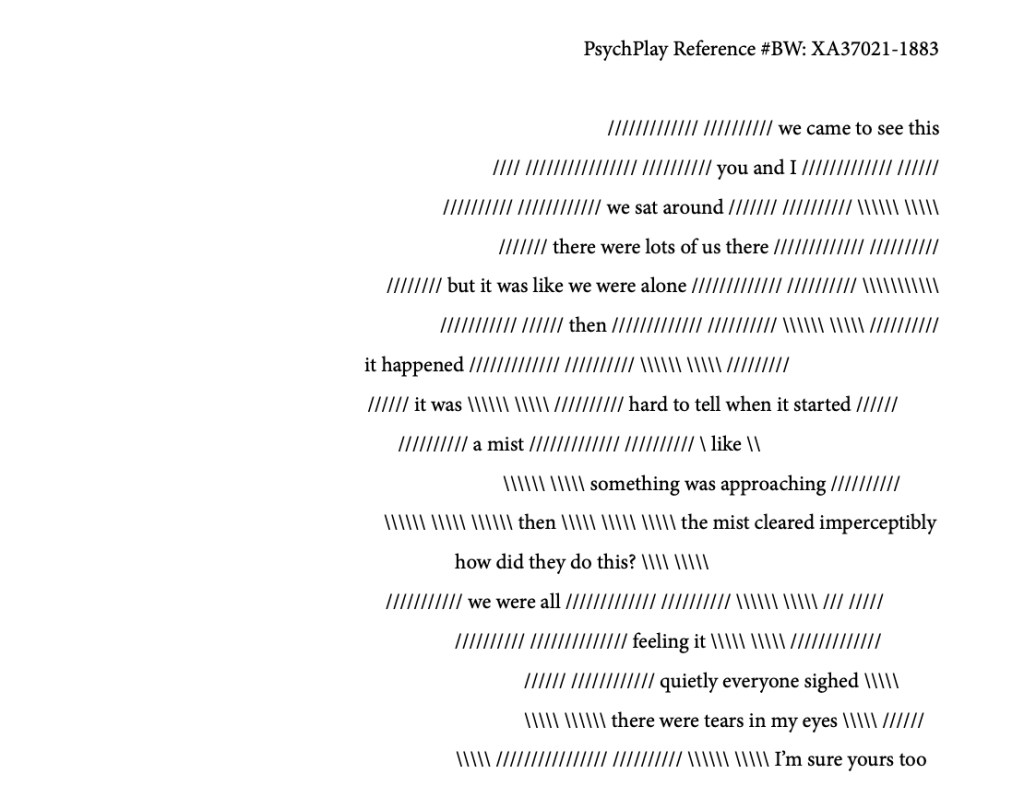
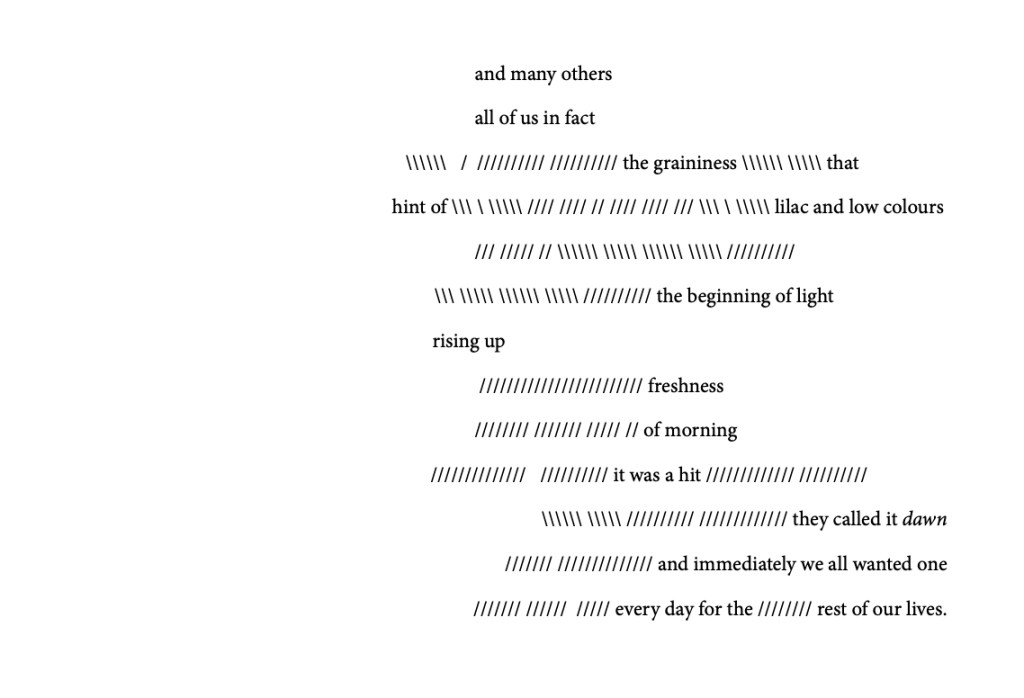
But there was a problem. And quite a big one at that (or that’s how it felt as I sweatily deliberated over what to do about it laying in bed in the early hours of the morning). In my book there are a few examples of ‘unconventional text layout’ in which the central character’s state of mind is reflected in the text and it ‘breaks down’ or ‘splits apart’ or ‘scrambles’ or repeats or glitches. This was giving the typesetter a real headache. With my fine arts training I’d made these visual text/concrete poetry ideas work in the format I had i.e. double-spaced and 11pt Helvetica Neue Light, but translating that to the actual book format wasn’t as easy as I’d hoped. In one or two cases it looked fine but elsewhere it hadn’t worked at all.
Unconventional text layout
I began by writing an email then decided this needed a phonecall and when I spoke to Carolina Santos at The Book Guild, we managed to talk through the best way to solve the issue: I’d send through ‘new’ versions of the pages (about 15 in all) and the typesetter would do their best to ‘mimic’ these ‘designs’. With the pdf in hand I now knew that the book’s font was Minion Pro 11pt spaced at 1.5 (approx), had an average of 60 characters across a page and 30 lines to a page (or 17 if it was a chapter heading) and armed with this information I was able to get to work. After further to and fro, there was a change of plan and it was decided to use the ‘unconventional text layout’ pages I’d designed for the typesetter as pdf image files within the book. This meant they’d be laid out exactly as I wanted them in the physical book and they’d also retain their integrity in an eBook, as readers zoomed in and out. Great.
There were only a couple of days left before our departure date when I sent off the new pages and as the weekend was looming I knew I’d not see the new version until I was in Colombia. I just had to hope it would be fine.
The revised typeset proof
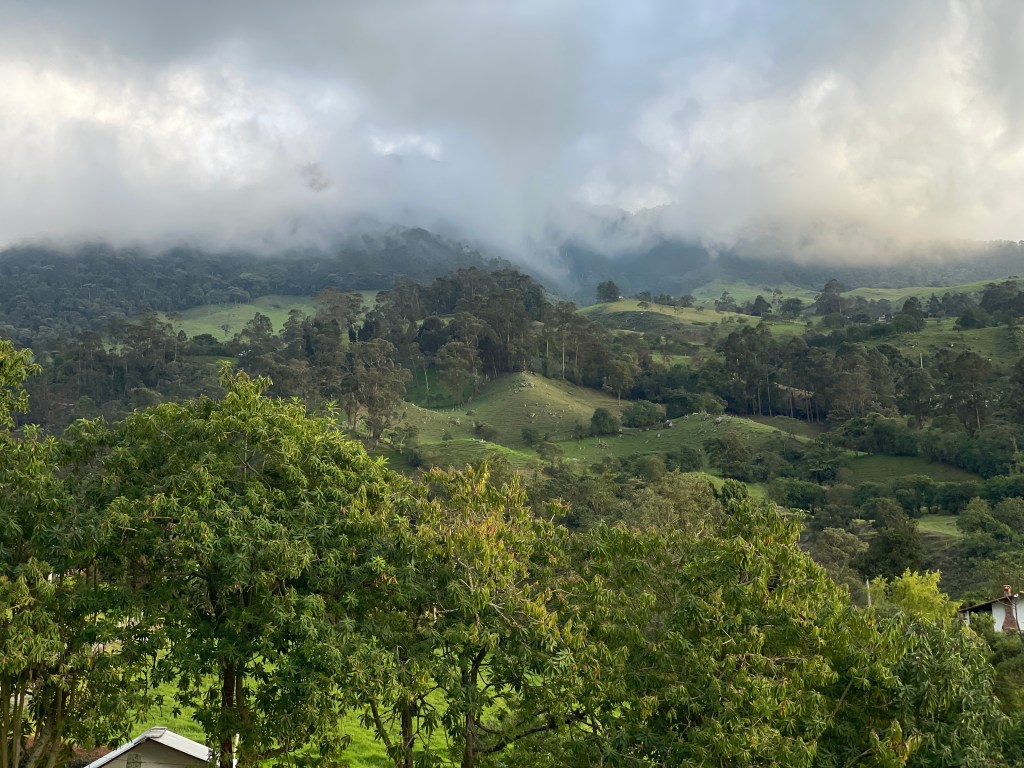
I sat in a hammock overlooking a beautiful Colombian stretch of hillside, referred to locally as ‘The Cloud Forest’, when I opened the revised typeset proof. It wouldn’t be impossible to re-design the pages if things hadn’t worked out but it would have been a real headache. Luckily the pages looked great. What an almighty relief. Incredibly, another run-through of the text revealed a few more things that needed tweaking. At this stage I couldn’t quite remember if we’d missed them before or whether things crept in with all the coming and going of manuscripts. So we sent these off and the next day the final, final, FINAL typeset manuscript was FINALLY ready.

 Rick Goldsmith
Leave a comment